★★★★A buyer
Straightforward and clear. Would suit anyone with a few hundred to a couple of thousand to clear — probably too simple if your situation is more complicated than that, which the page does say.
It earns its place when the amount is a few hundred to a few thousand, it is spread across two to eight places, and what is missing is a date rather than an intention.
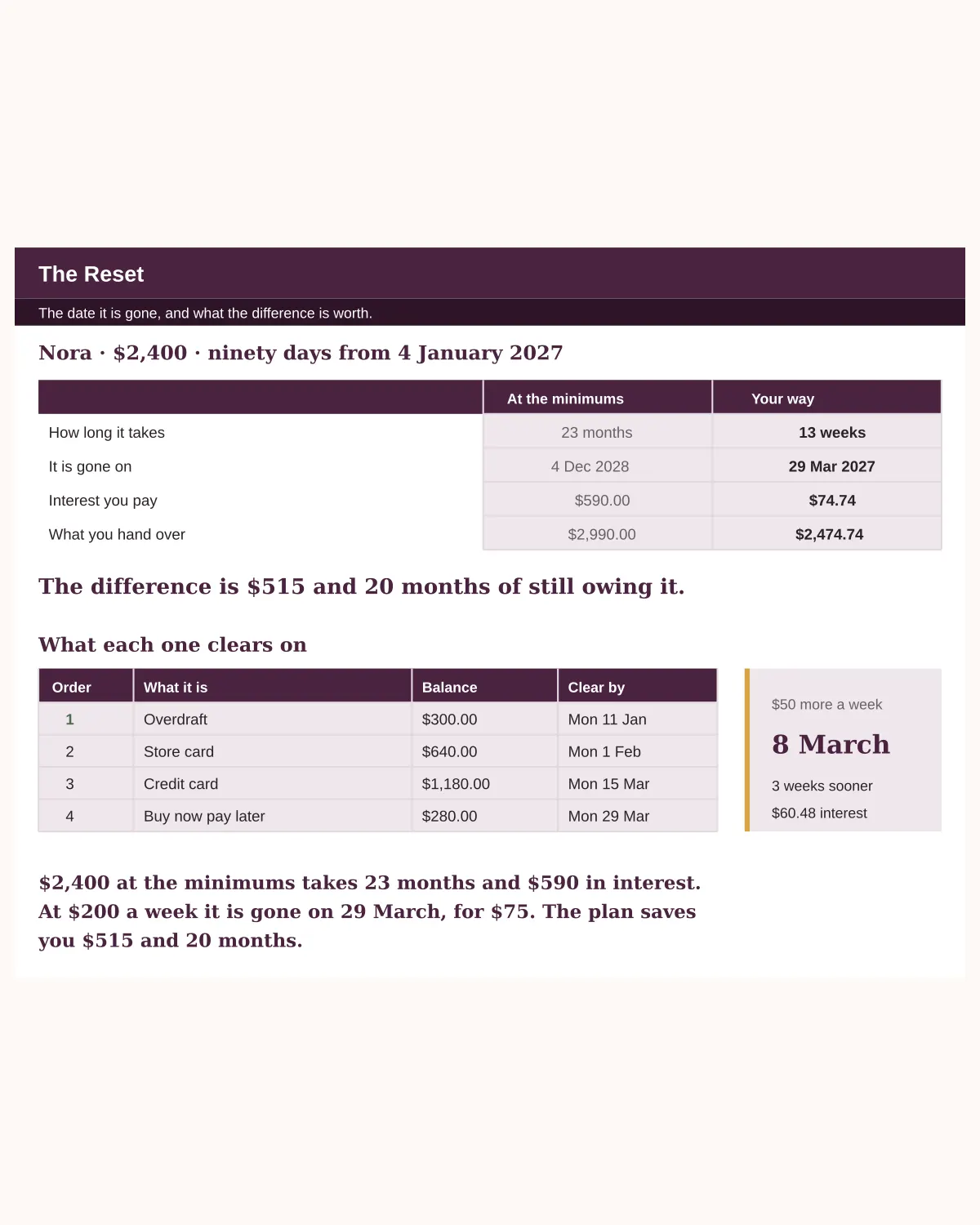
Put in what December cost across every card, overdraft and payment plan, say what you can put at it each week, and it gives you the day it is gone — and the date each individual debt clears on the way there.
Not in one place, either. A card, a store card opened at a till in November, an overdraft that has been there so long it stopped feeling like borrowing, and something on a payment plan. Four rates, four minimums, and no single number anywhere. So the usual answer is to pay something at it each month and hope. That works, in the sense that it eventually ends — about twenty-three months later, having cost five hundred dollars more than it needed to, and having been carried past the next Christmas on the way. The missing thing was never discipline. It was a finish line you could actually see.
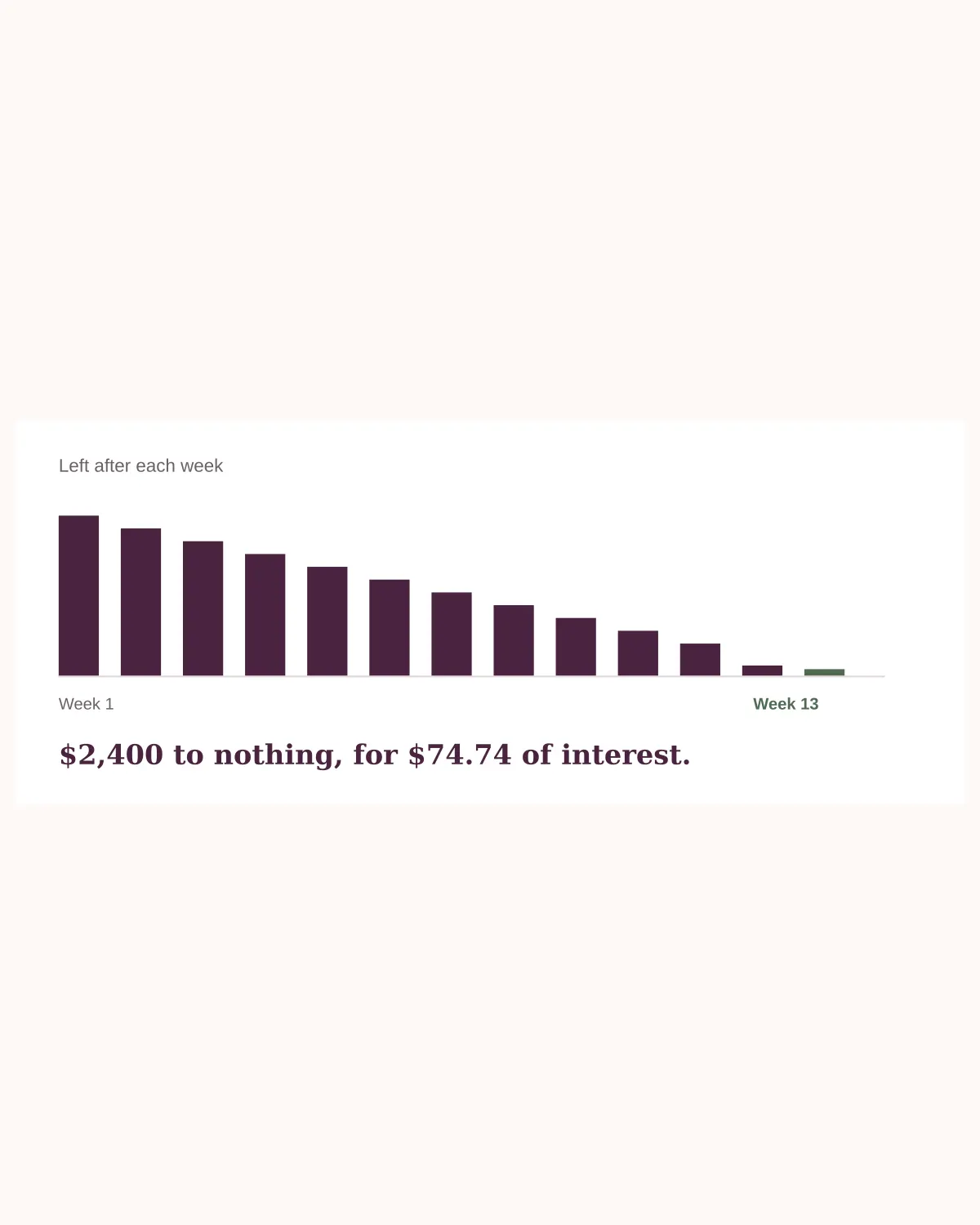
Thirteen weeks worked out properly, week by week, with the interest landing where it really lands. At the end of it is a day. That day is the product. The identical debt paid at the minimums instead. Months, interest, and the total handed over. Put side by side, the weekly amount stops feeling like a sacrifice. Avalanche clears the dearest rate first, snowball the smallest balance. One dropdown, and every clear-by date rearranges itself so you can see both.
The overdraft goes on the eleventh of January. The store card on the first of February. The credit card on the fifteenth of March. Four separate finish lines instead of one distant one, which is the difference between a plan that survives February and one that does not. Change the weekly amount and every date moves together. Switch from avalanche to snowball and they rearrange. Have a lean week and put the real number in the yellow column — the balance carries, the interest still lands, and the date moves out honestly rather than quietly. And if ninety days is not enough, it says so plainly and tells you what a week would have to be for it to work.
If you are behind on rent, in arrears, or being chased, this is the wrong thing to buy. Free money advice services exist, they are better than any spreadsheet, and they can do things with your creditors that a file on your laptop cannot. Please use them first.
It uses one blended rate rather than running four separate balances — accurate to within a couple of dollars over ninety days, and readable on one page, but it is a plan rather than a statement. And the minimums comparison assumes today's minimum every month, which is the kind version of the truth.
It earns its place when the amount is a few hundred to a few thousand, it is spread across two to eight places, and what is missing is a date rather than an intention.
Straightforward and clear. Would suit anyone with a few hundred to a couple of thousand to clear — probably too simple if your situation is more complicated than that, which the page does say.
Not a budgeting app, and I am glad. You type what you paid and it shows the payoff date moving. That is the whole thing and it is enough.
Christmas on three cards, which I had been carefully not adding up. Putting them in one place was grim for about ten minutes and then genuinely useful. Ninety days is short enough that I can see the end of it.
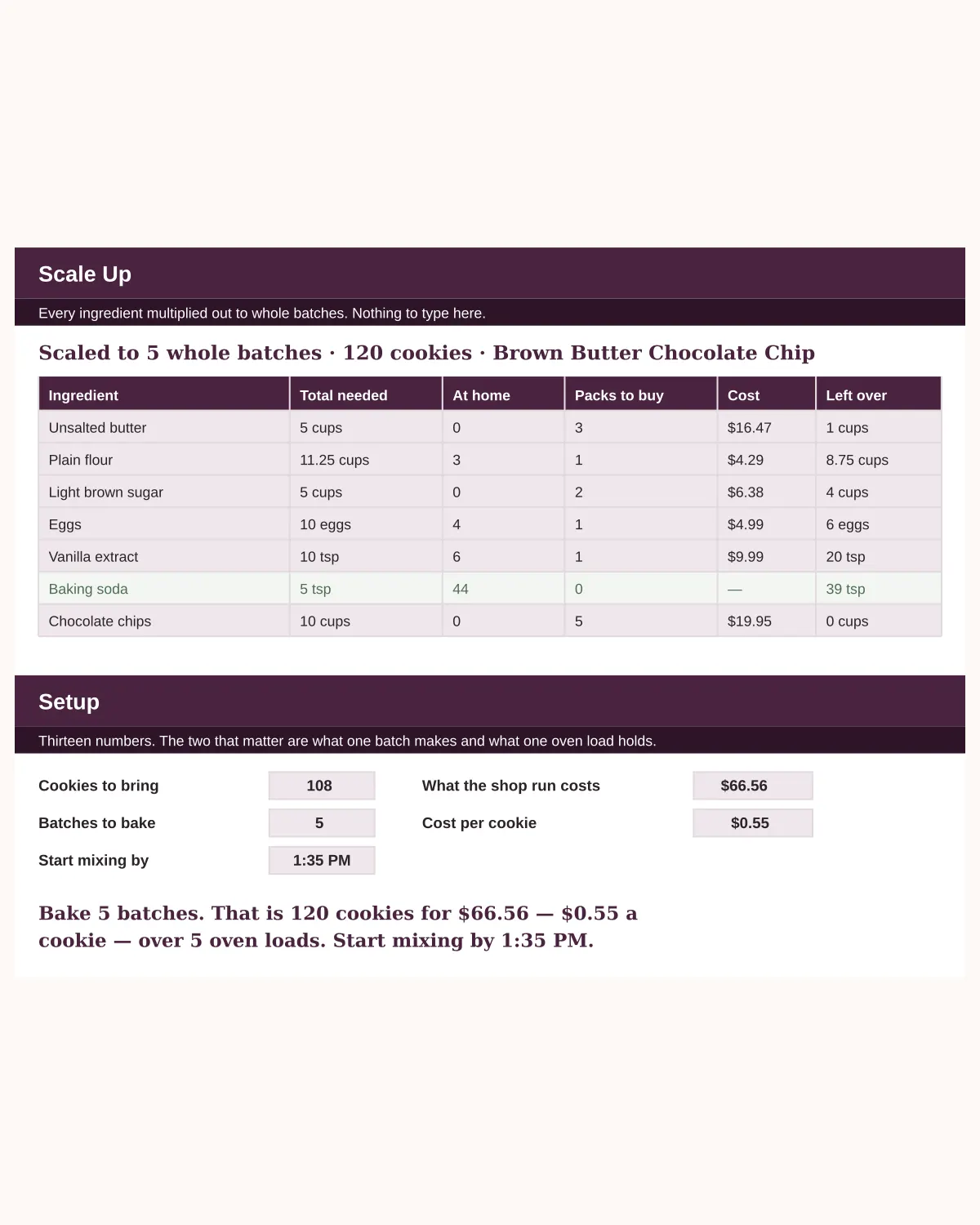
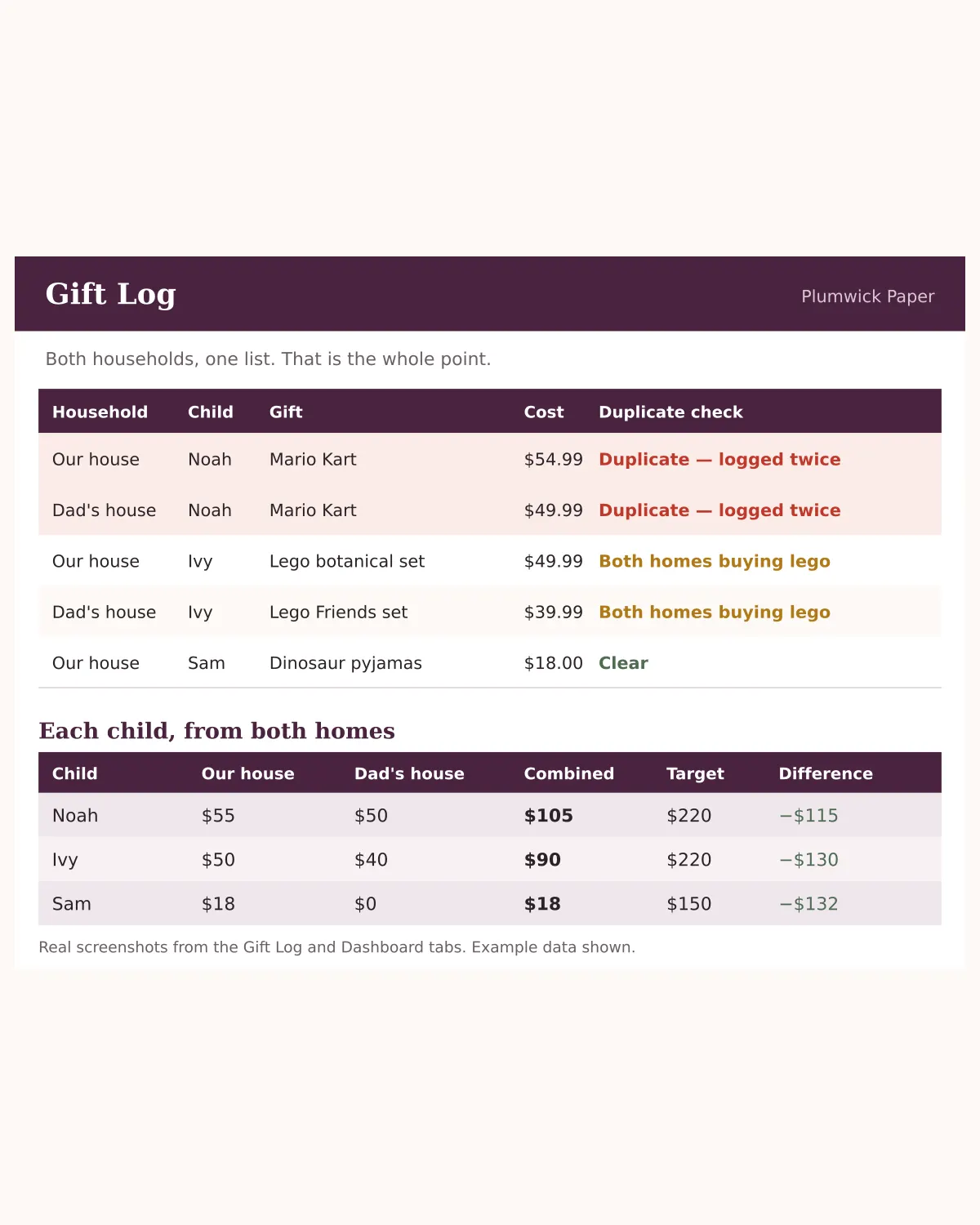
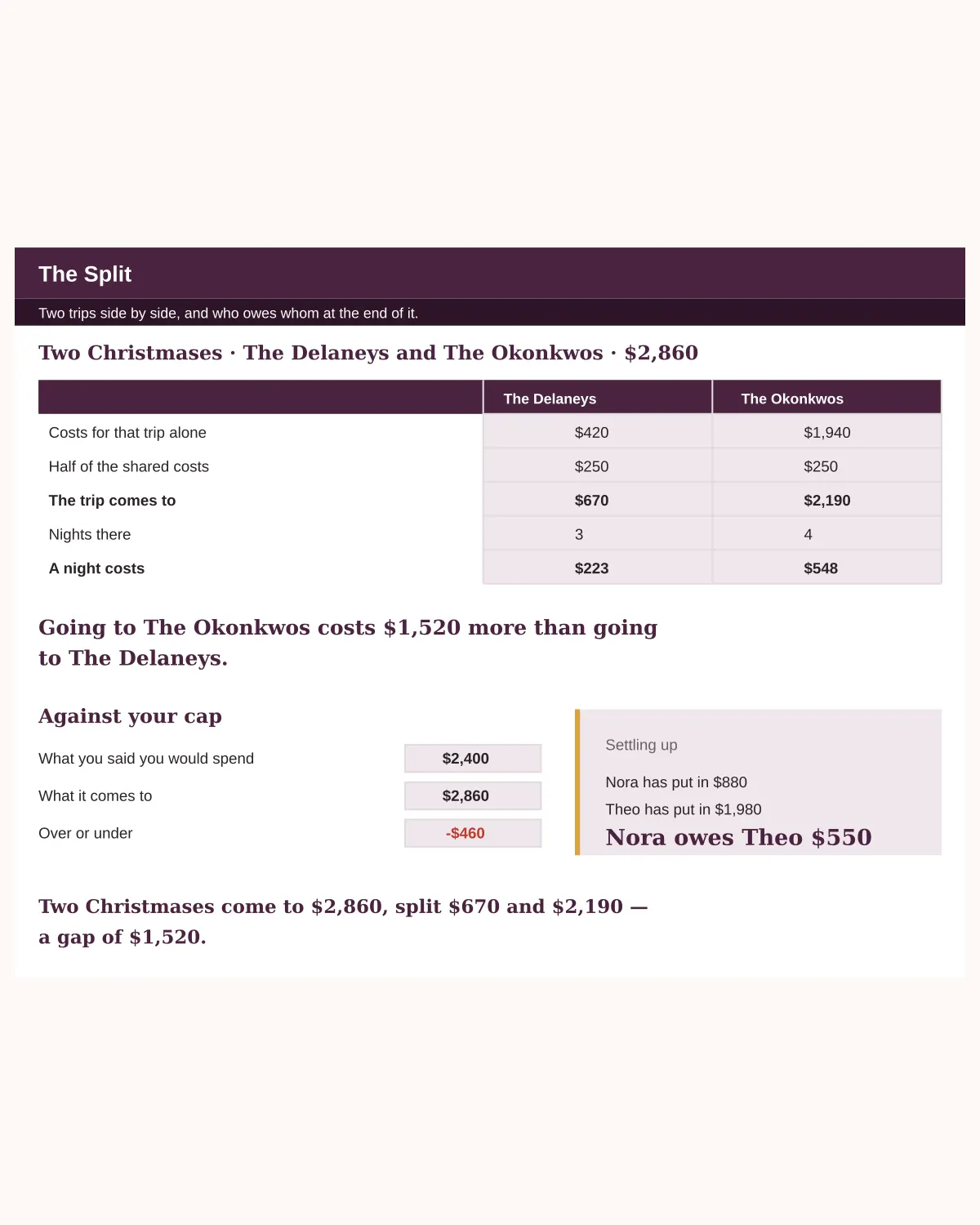
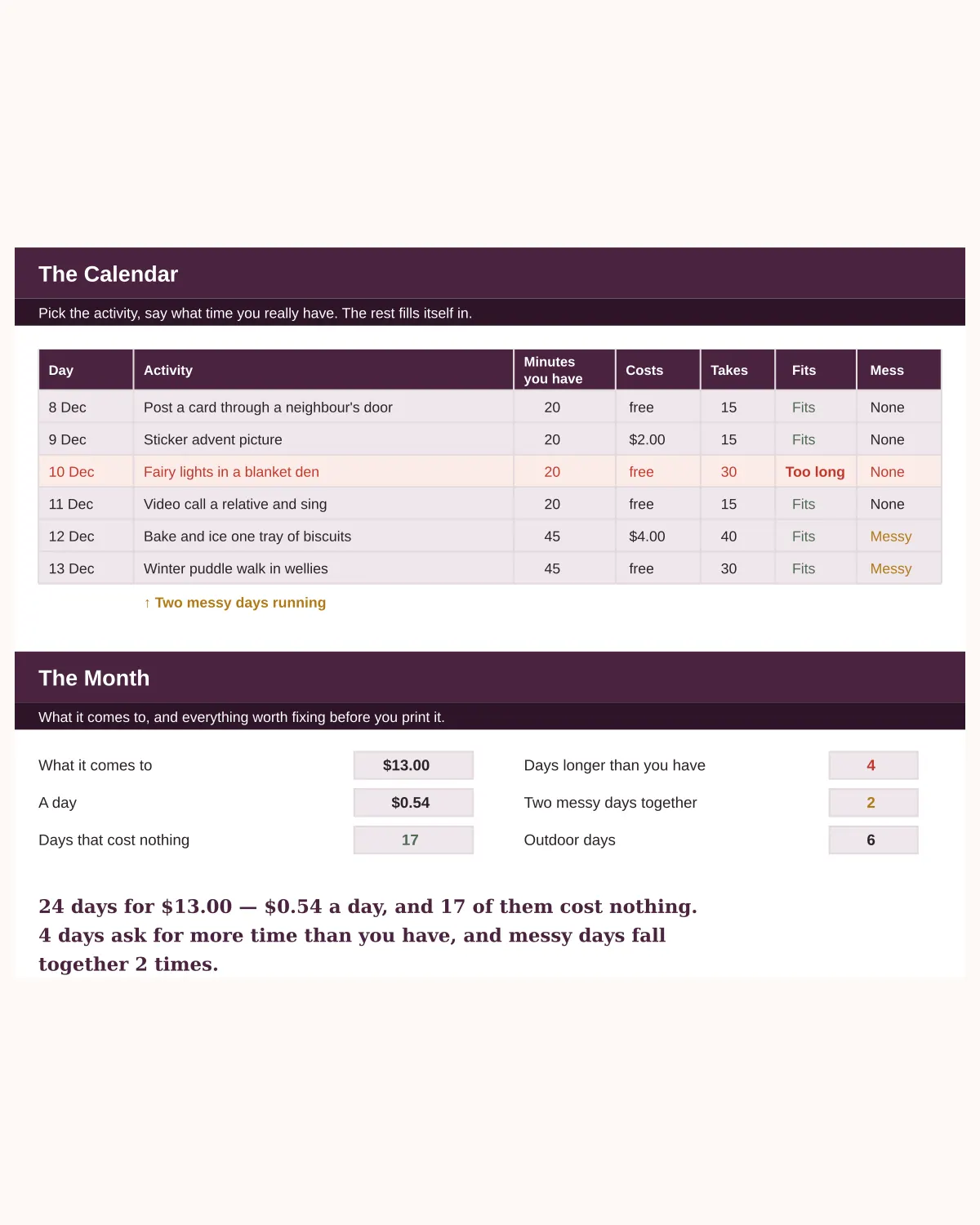
The gift budget, the Thanksgiving timeline, the blended-family gift tracker, the remote Secret Santa kit, the cookie swap planner, the two-families travel budget, the fifty-card Christmas list, the mixed-diet menu planner, the toddler activity calendar, and the ninety-day January debt reset. Bought separately they are $90.
Get all ten — $39